
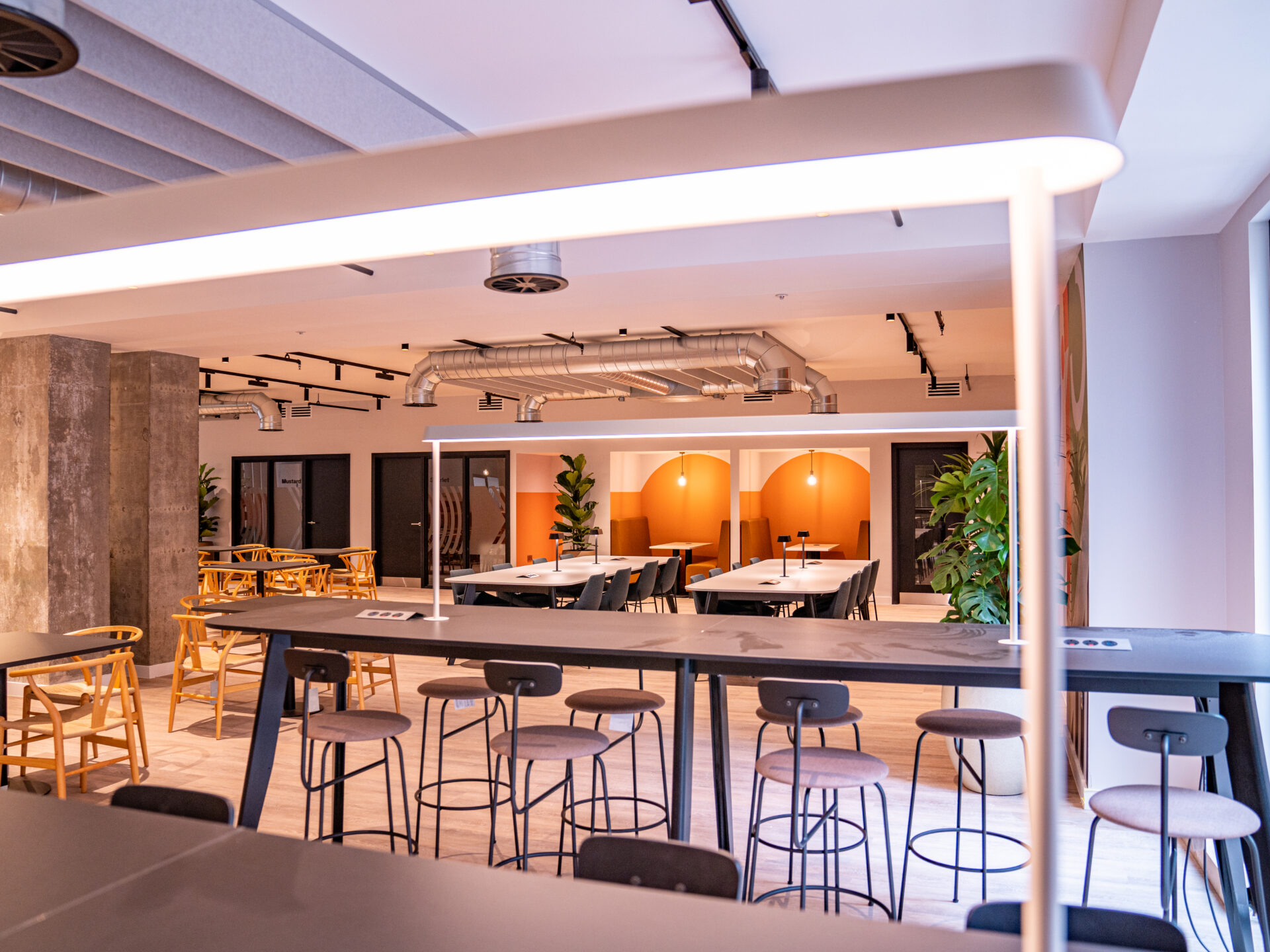
Hybrid working has become a permanent feature of the modern workplace, with data from 2025 showing that 28% of UK workers now embrace it. This shift has created a new challenge for organisations: supporting employee flexibility while ensuring the office remains a productive and valuable asset.
Thoughtful office fit-out design plays a critical role in achieving this balance. By creating adaptable spaces, integrating effective technology, and prioritising wellbeing, the workplace can actively enable hybrid working rather than simply respond to it.
Key Takeaways
- Hybrid working is now a permanent part of the UK workplace, requiring offices to balance flexibility, productivity, and efficient use of space.
- Flexible office layouts with reconfigurable spaces enable organisations to adapt to changing attendance patterns and varied work activities.
- Integrated technology is essential for seamless collaboration between in-office and remote employees, supporting hybrid meetings as standard.
- Future-proof and wellbeing-focused design encourages employees to return to the office, supports long-term value, and enhances engagement, retention, and performance.
Flexible Office Layouts For Hybrid Working
Flexibility is required for hybrid working to work. Office attendance will vary by team, by day, and by task, which means static layouts quickly become inefficient. Modern design responds by creating spaces that can be reconfigured with minimal disruption. Moveable partitions, modular furniture, and multi-purpose areas allow organisations to scale space usage up or down as needed.
This approach supports a range of activities without committing floor area to single-use functions. Collaborative zones can become training spaces, while quiet areas can be expanded or reduced in response to demand. The result is an office that supports hybrid schedules and avoids wasted space.
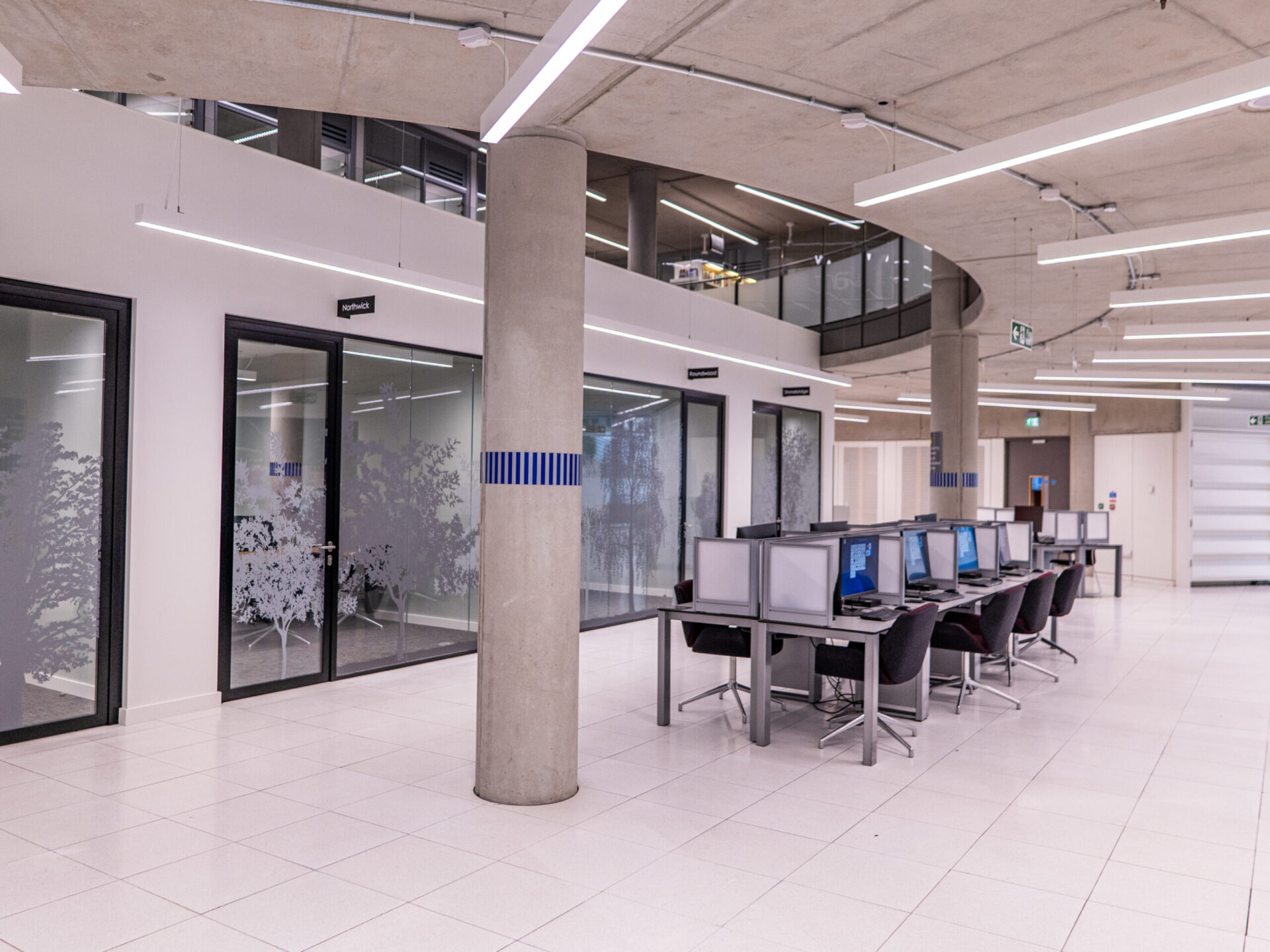
Willmott Dixon Interiors’ work at Brent Council Civic Centre shows how thoughtful reconfiguration can transform existing buildings into flexible environments that better serve the users. By redesigning 22,600 sq ft of public space, including the mezzanine library with study areas and quiet zones, the project created adaptable areas that can support a variety of activities and evolving needs.
Office Technology That Supports Hybrid Collaboration
Technology is fundamental to successful hybrid working, and it must be embedded into the fabric of the office. A modern fit-out considers digital infrastructure from the outset, ensuring that remote and in-office staff can collaborate seamlessly. Meeting rooms are designed with acoustics, lighting, and integrated systems that support video conferencing as a default rather than an add-on.
Wireless connectivity, intuitive room booking, and reliable power provision all contribute to a smoother experience. When technology works effortlessly, employees spend less time managing systems and more time focusing on meaningful work. This is especially important in hybrid environments where meetings often include both physical and virtual participants.
Seamless collaboration is a key priority in hybrid workplaces. At the CSE Innovation Centre, University of Westminster, our team delivered a 40-seater programming lab that doubles as an exhibition and collaborative space. Integrated AV technology and wireless projection systems ensured that both in-person and remote participants could collaborate effectively, highlighting how technology can enhance hybrid working.
Future-Proof Office Fit-Out Design
Hybrid working will continue to evolve, shaped by organisational change, technology, and employee expectations. Future-proof office design responds to this by prioritising adaptability and long-term value. Instead of fitting out an office for a single point in time, contemporary refurbishment strategies focus on creating a flexible framework that can evolve as requirements change.
Key considerations may include:
- Raised access floors to allow easier reconfiguration
- Flexible service distribution to support changing layouts
- Durable materials selected for longevity and ease of replacement
By planning for change from the outset, businesses can protect their investment and minimise the need for disruptive refits in the future. A future-proof office is designed to support growth, contraction, and new ways of working with equal confidence.
Office Design That Encourages Employees to Return
One of the challenges of hybrid working is giving people a genuine reason to come into the office. A modern design will address this by creating an environment that offers something different from home working. Spaces are designed to support collaboration, social interaction, and a strong sense of identity.
Design quality plays a significant role here. Natural light, thoughtful spatial planning, and well-designed shared areas help create an environment that feels purposeful and engaging. When employees see the office as a place that enhances their working day, attendance becomes a positive choice rather than an obligation.
Also read: Importance of Design in the Interior Fit-Out of Workplaces
Workplace Design That Improves Wellbeing
Employee wellbeing is closely tied to how people perceive their work environment. A considered fit-out regards physical and mental wellbeing as core design drivers. Good air quality, appropriate lighting, and comfortable acoustics contribute to healthier spaces that support concentration and reduce fatigue.
Design can also encourage healthier behaviours, such as movement throughout the day and opportunities for informal interaction. By creating a workplace that supports both wellbeing and productivity, organisations demonstrate a commitment to their people. In turn, this supports employee retention and engagement in a hybrid working model.
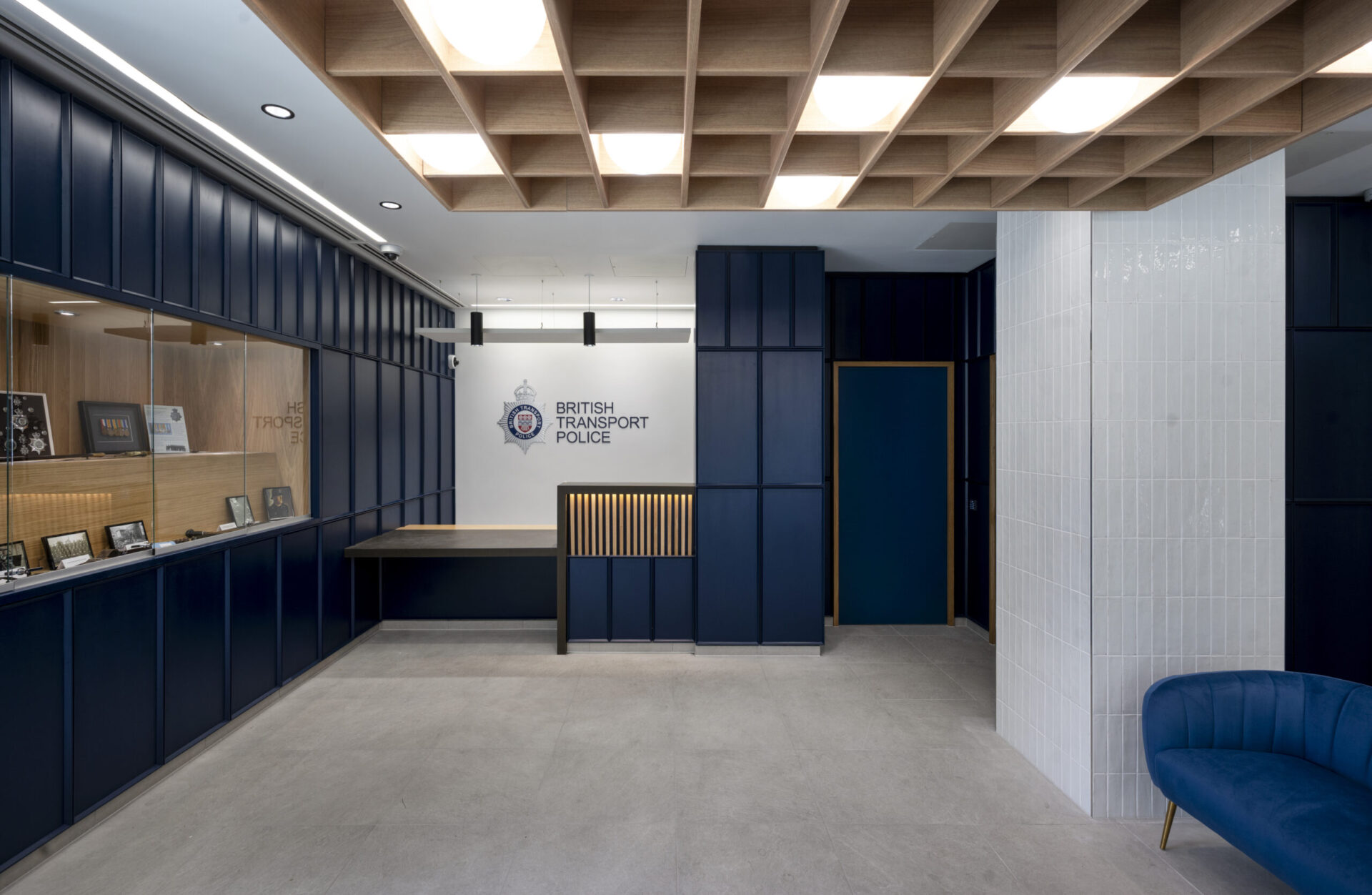
Willmott Dixon Interiors’ refurbishment of the British Transport Police headquarters at 200 Buckingham Palace Road illustrates how design can enhance wellbeing in practice. The project delivered bright, open-plan office spaces with collaborative breakout zones and dedicated areas tailored to operational needs, ensuring an inclusive and supportive environment for staff. Accessibility features and thoughtfully zoned areas contribute to comfort and ease of use, while sustainability-focused upgrades help create a healthier workspace overall.
Office Fit-Out from Willmott Dixon Interiors
Choosing the right partner is as important as the design itself. Backed by over 174 years of experience, Willmott Dixon Interiors is part of one of the UK’s most established construction businesses, offering the confidence and stability needed for successful office fit-out delivery.
“People and how they use space are at the heart of every project we deliver. Our office fit-out approach is focused on creating workplaces that genuinely support the way organisations and their teams work.”
– Adam Worrall, Managing Director, Willmott Dixon Interiors
Our streamlined approach focuses on quality and long-term value. An office fit-out from Willmott Dixon Interiors gives you:
- A trusted and financially secure partner with a long-standing industry reputation
- Transparent project management focused on on-time and within-budget delivery
- Proven commercial fit-out expertise across both traditional and design & build projects
- Seamless design and build capability from early design stages through to completion
- A strong commitment to sustainability, supporting your journey towards a lower-carbon workplace
Contact us today to discuss how an office fit-out from Willmott Dixon Interiors can support your hybrid working strategy.