
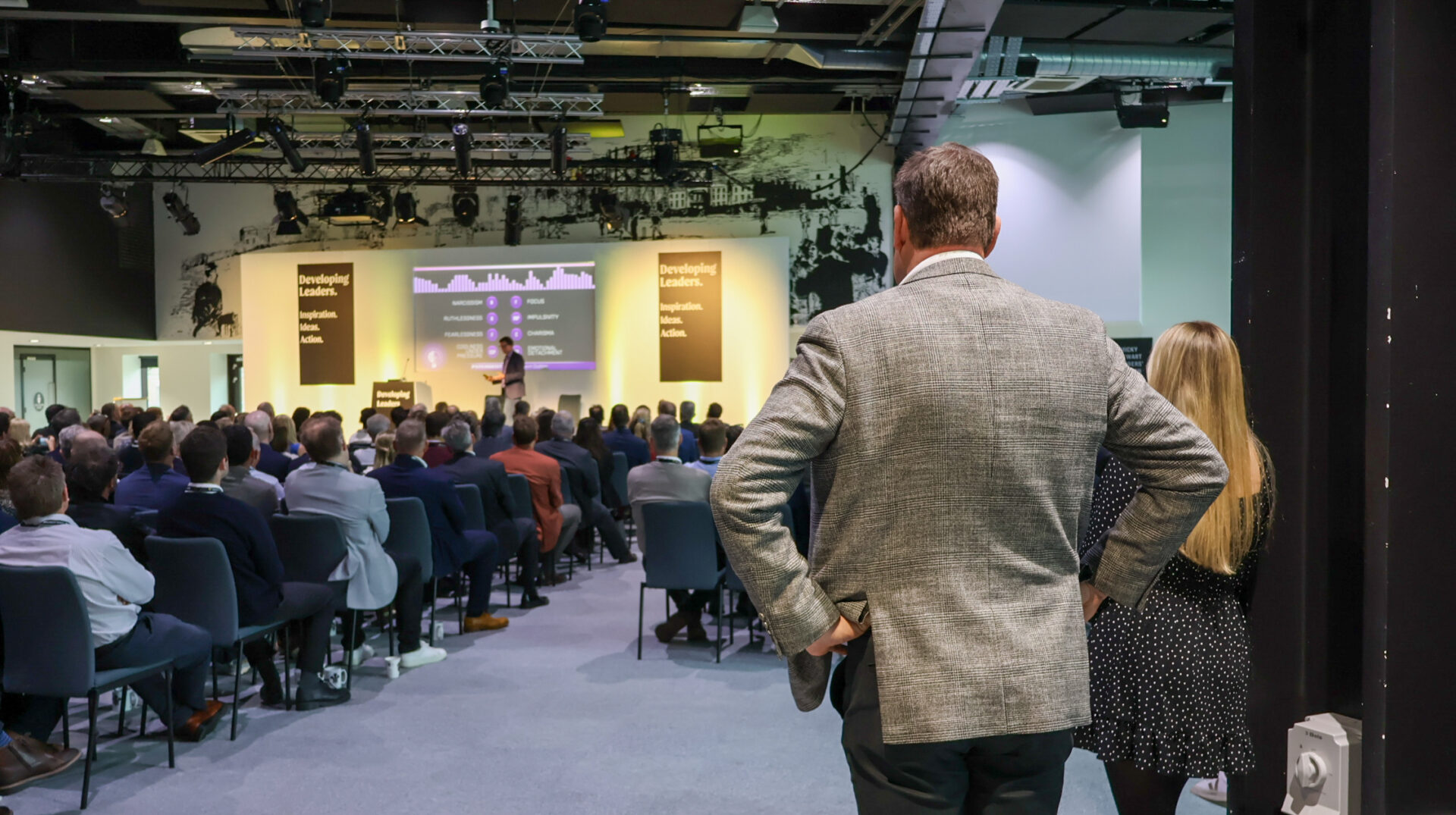
What can a Royal Marines Commando, a King’s Counsel, a pioneering heart surgeon, and a psychologist who studies psychopaths teach us about leadership?
At this year’s Developing Leaders South conference, a fascinating pattern emerged.
While their worlds could hardly be more different, all four keynote speakers returned to remarkably similar themes of courage, humility, preparation and teamwork, revealing what effective leadership looks like when the pressure is at its highest.
Read: Developing Leaders: What Four Extraordinary Careers Reveal About Leadership
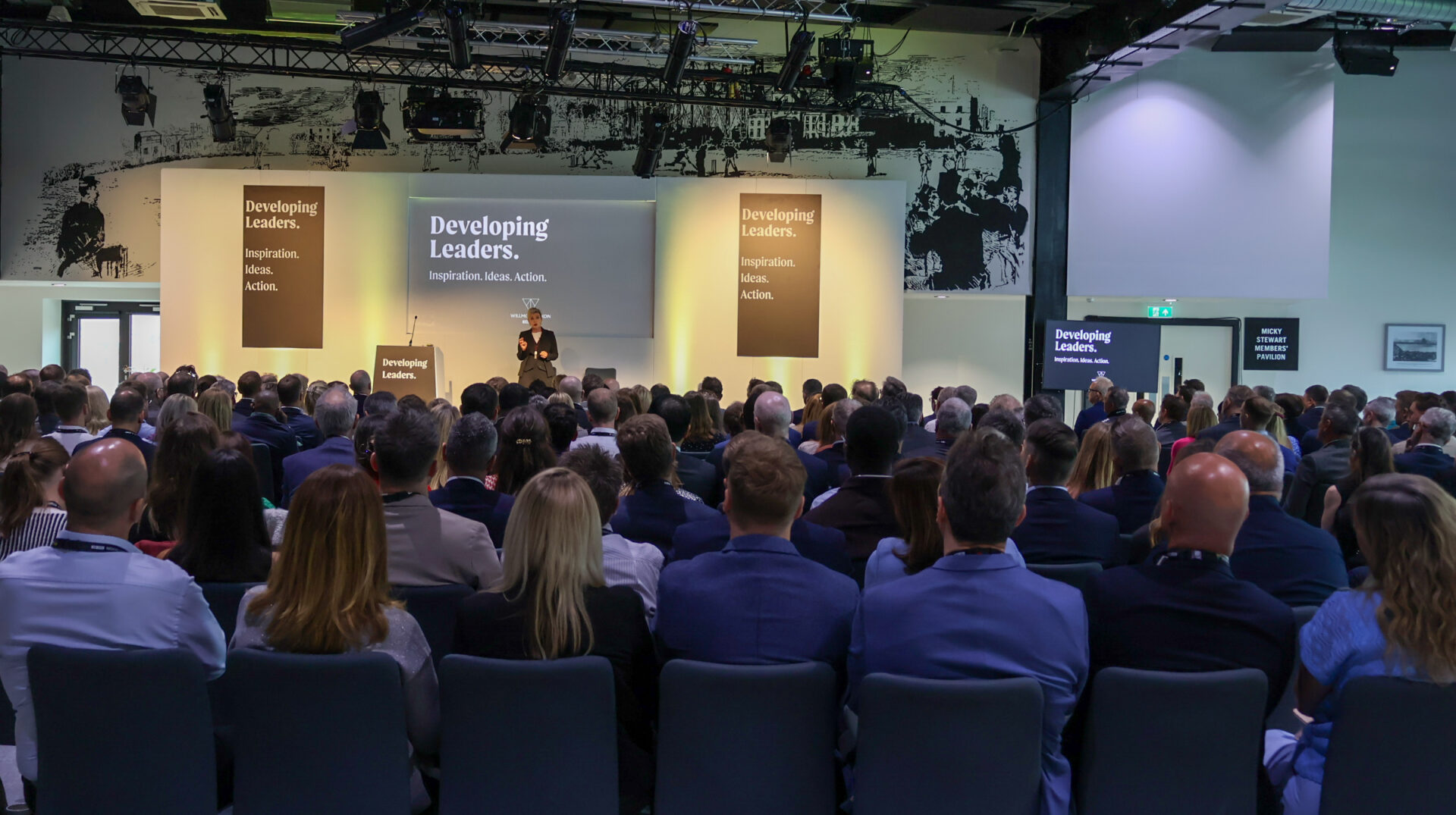
Leadership is built before the pressure arrives
For Scotty Mills, leadership starts long before a crisis unfolds. Drawing on his experiences in the Royal Marines, including leading operations in Iraq where intelligence reports suggested his team had only a 20% chance of survival, he spoke about the importance of preparation.
The Royal Marines’ approach is built around making standards part of everyday life, not something reserved for difficult moments. As Scotty put it: “Train hard, to fight easy”.
His message was also one of personal growth and resilience. The Royal Marines train people to push beyond what they believe their limits to be, creating individuals who can perform in even the most intense situations, while never losing sight of the values that define a team.
Great leaders challenge assumptions
Jo Delahunty KC specialises in making judgements without being judgemental.
As one of the UK’s leading barristers, her role demands an ability to understand people, challenge assumptions and uncover facts, without allowing preconceptions to dictate outcomes.
Her message was that hidden biases exist whether we acknowledge them or not. The key is recognising them. She encouraged leaders to be honest about their own prejudices and weaknesses, and spoke about how we can adapt our communication style to create environments where people feel empowered rather than intimidated.
One observation particularly stood out: “It’s not always the noisiest people who get heard. The thinkers are often the ones with the brightest ideas”.
High-performing teams are built on trust
Professor Martin Elliott spent his career operating on the hearts of babies at Great Ormond Street Hospital, a craft with next to no margin for error.
While the surgeon often attracts the attention, his presentation highlighted a different reality. Successful outcomes depend on teams.
Complex surgical procedures require dozens of people working together seamlessly, and in some cases, Martin relied on as many as 29 professionals to contribute to a single operation.
His team’s breakthrough came not through individual brilliance, but through empowering colleagues to speak up, regardless of their role or seniority. As Martin explained: “We don’t make decisions on our own. We make them as a group”.
It demonstrates that high-performing teams are rarely built by everyone thinking in the same way.
Why psychopaths make good leaders
Professor Kevin Dutton brought a different perspective to the day.
Drawing on decades of research into psychopathy, he explored traits including fearlessness, focus, emotional detachment, ruthlessness and poise under pressure.
Through a version of his widely known psychopathy assessment, delegates were invited to consider where they might sit on the psychopathy spectrum and what those characteristics can reveal about behaviour and performance.
While the term often carries negative connotations, Kevin argued that certain traits associated with psychopaths, when balanced with integrity and purpose, can be highly valuable in leadership, business and crisis situations.
Are leaders born or made?
Perhaps most striking was that none of the speakers set out to become the person standing on stage.
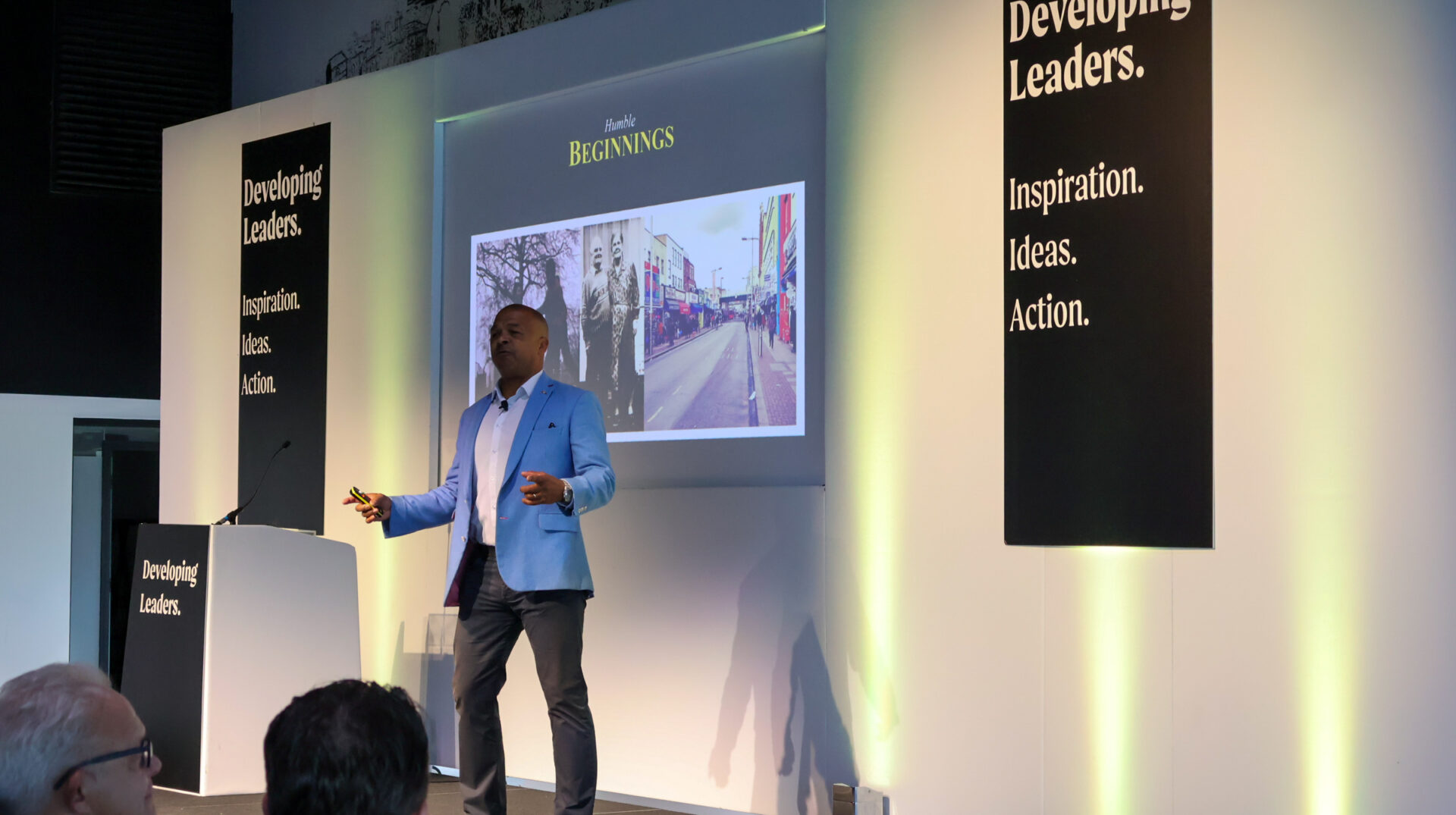
Scotty Mills joined the Royal Marines almost by accident after walking into a recruitment office to escape the rain. Jo Delahunty KC was once told she was bright enough to work in a bank but had “too much attitude” to work in a front of house role. Professor Martin Elliott initially planned a different medical career before discovering paediatric cardiac surgery. While Professor Kevin Dutton, the son of (in his own words) “a real life Del Boy” emerged from a colourful, working-class London background to become one of the world’s foremost authorities in his field.
The conference raised an interesting question: are leaders born or made?
While their journeys were different, all four speakers suggest leadership often begins when somebody sees something in you, before you see it in yourself. As Jo Delahunty said: “You have to lean down to pull people up the ladder.”
Five Key Takeaways from Developing Leaders South 2026
- Preparation creates confidence. The best leaders build capability before pressure arrives.
- Challenge assumptions. Effective leadership requires judgement, not being judgemental.
- Create environments where people can speak up. Teams perform best when every voice can be heard.
- Trust those around you. Great outcomes happen when people are empowered to contribute.
- See potential in others. Leadership is often about helping people achieve more than they thought possible.