
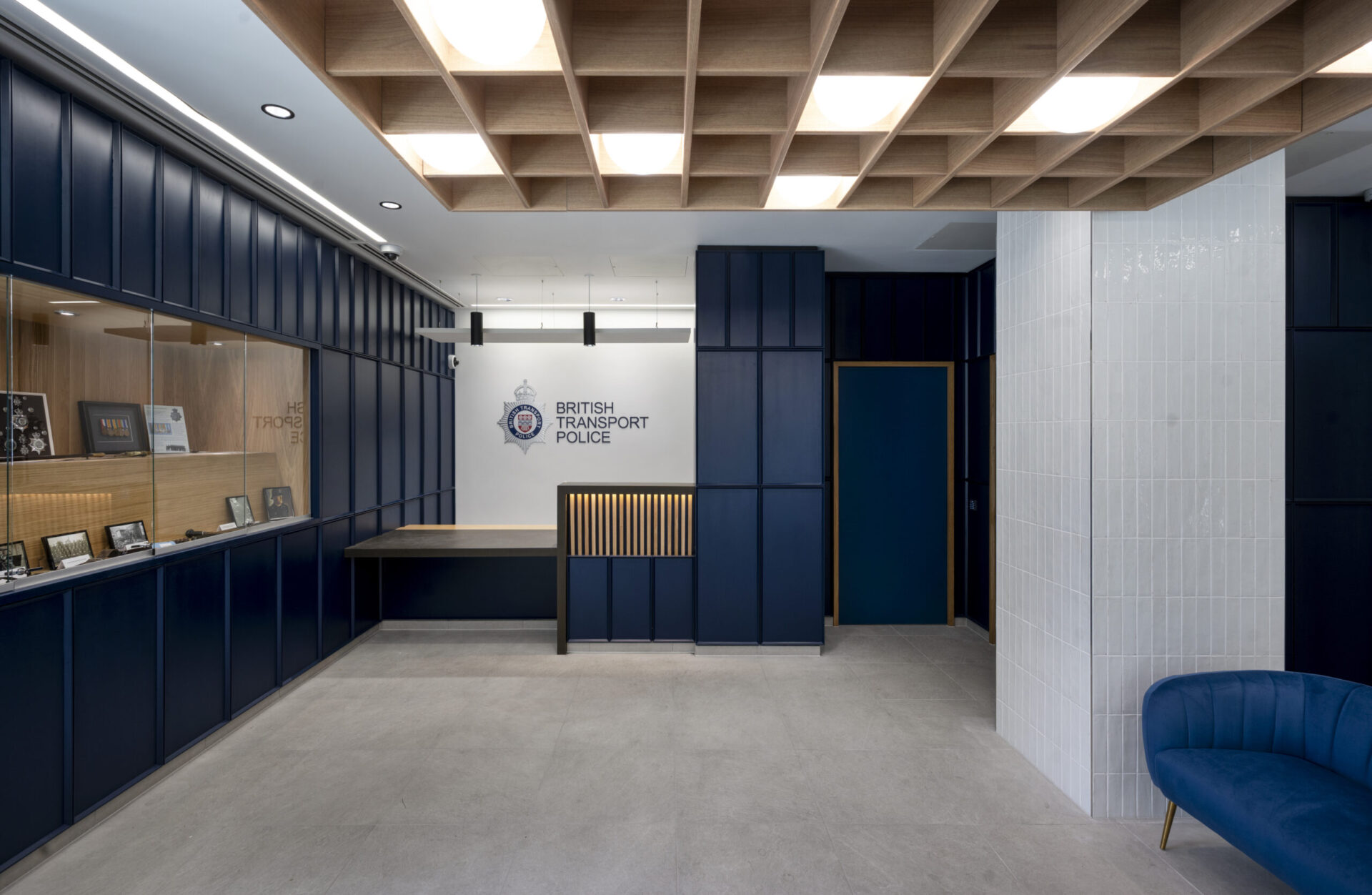

Rob Brown, Project Director at Willmott Dixon Interiors, explores how the delivery of a new headquarters for the British Transport Police reflects commitments to safety, sustainability, and long-term value in public sector estates.
The UK public sector is committed to decarbonisation. In numbers, this involves targeting a 50% reduction in direct greenhouse gas emissions by 2032 and a 75% reduction by 2037, to achieve net-zero by 2050. That places an immediate spotlight on estates, particularly ageing building stock.
Given that the majority of buildings that will exist in 2050 are already built, decarbonisation targets cannot be met through new construction alone, making retrofitting of existing structures one of the most effective and essential routes to the decarbonisation of buildings.
Retrofit approaches are gaining traction because they tackle a key source of emissions in the built environment: embodied carbon, while also improving operational performance. Upgrading insulation, glazing, and mechanical and electrical (M&E) systems alongside low-carbon heating and renewable energy can dramatically reduce energy demand and deliver significant improvements to building performance.
sRetrofit also allows organisations to retain and upgrade operational assets rather than relocate, with our delivery of the new British Transport Police headquarters at 200 Buckingham Palace Road, London, being a great practical example. Transforming an existing seven-storey building, the project showcases a modern workplace, aligned with net-zero ambitions.
Balancing Safety and Sustainability
The British Transport Police’s HQ required comprehensive modernisation to meet current standards. New systems were designed to minimise operational carbon emissions and maximise energy efficiency, targeting an EPC A/B rating, aligning with public sector priorities around energy performance and lifecycle cost reduction.
The approach taken was a full internal strip-out across all seven floors, enabling the creation of flexible, collaborative office space delivered to CAT B fit out standards.
At the core of the project is a comprehensive replacement of M&E services. Additional works included roof upgrades and enhancements to fire safety systems, ensuring the building meets modern regulatory requirements while future-proofing the asset against evolving standards.
Upgrading for Performance
Safety remains a defining requirement in projects of this nature. For a critical service such as the British Transport Police, the built environment must support secure, resilient operations while accommodating modern ways of working.
This dual focus on safety and sustainability is increasingly shaping decision-making across the public sector. Infrastructure must not only reduce carbon but also enhance operational reliability and user wellbeing.
The headquarters project demonstrates how these priorities can be aligned through design and delivery, creating a workplace that is both secure and environmentally responsible.
Delivering Long-Term Value
Beyond environmental performance, the refurbishment delivers a range of wider benefits:
- Increased asset value, supporting strong returns for public sector stakeholders
- Community impact through skills development and local employment opportunities during delivery
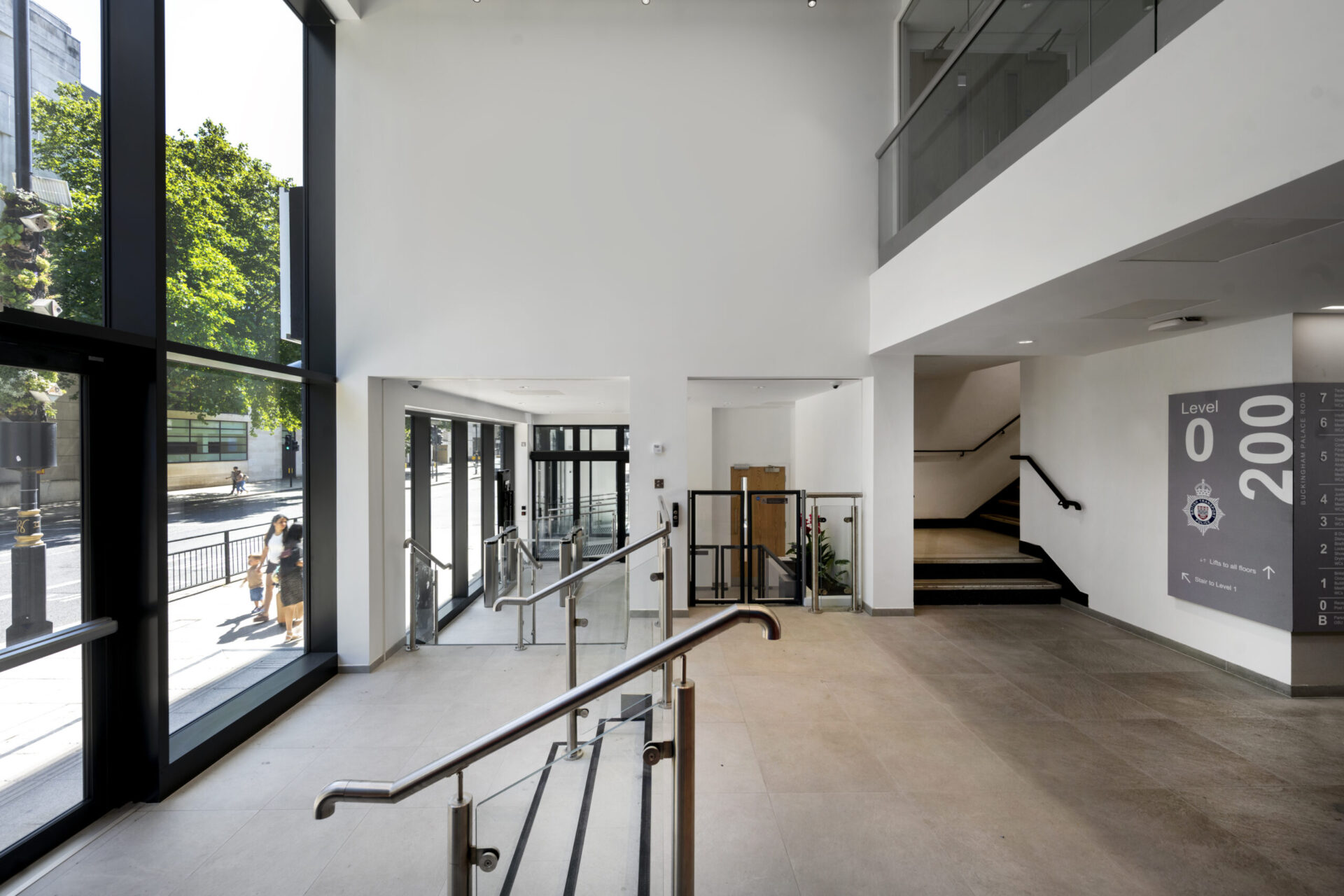
Accessibility was a central consideration throughout, with the design ensuring full DDA compliance and improved inclusivity for all users. This reflects a wider trend in public sector workplaces with increased focus on both functionality and user experience.
Another key feature of the development was the redesigned arrival experience, including a new front entrance that creates a clearer, more welcoming interface between the building and the public realm. These outcomes reflect a shift in how public sector projects are evaluated, moving beyond capital cost to consider whole-life value, social impact and environmental performance.
A Model for the Public Estate
With much of the UK’s public sector property portfolio in need of renewal, refurbishment-led approaches will play a critical role in meeting net-zero targets.
Projects like the refurbishment of the British Transport Police headquarters highlight what can be achieved through strategic retrofit: lower carbon, improved performance, and assets that are better aligned with the needs of modern public services.
As decarbonisation targets draw closer, the ability to deliver safe, sustainable and adaptable environments will become an increasingly important benchmark for success across estates.
Get in touch today to discuss your upcoming project and discover the value of working with an experienced retrofit company like Willmott Dixon Interiors.