

Climate change impacts are accelerating, and, against the current geopolitical backdrop driving fluctuations in energy prices, decarbonisation of assets is crucial to drive business resilience and effective risk management. Key to achieving this is refurbishment and improvements across existing building stock.
Buildings account for approximately 39% of global energy-related carbon emissions, with 28% being operational, and 11% from construction and materials. That’s according to the World Green Building Council. It illustrates why real estate has become one of the key sectors focussed on reducing emissions at pace.
While new developments play a role, around 80% of the buildings that will be standing in 2050 already exist today, meaning the greatest opportunity for impact lies in retrofitting and refurbishing existing assets.
The path to effective decarbonisation
Retrofit provides the opportunity to enhance energy performance and improve the wellbeing of staff in offices. Improving insulation and airtightness, as well as glazing and façade performance, grouped with a move to all-electric building services, consistently delivers substantial operational carbon reductions. Modern digital controls and smart building systems further enable operational carbon to be tightly managed. Our Energy Synergy ™ system helps our clients close the performance gap (the gap between designed and in-use building energy performance) leading to a 15% better-than-expected performance on average.
Crucially, retrofit also delivers significant embodied carbon savings by maximising reuse and retention of materials whether it is retaining the actual structural frame of the building or reusing internal equipment and materials such as partitions. When done well, retrofitted buildings can be more resilient against increasing severe weather events and provide healthier work environments. All this makes a fully retrofitted property portfolio more attractive to future tenants.
Considerations for sustainable retrofit
Delivering meaningful sustainability outcomes requires early engagement, ideally from RIBA Stage 2 or earlier, supported by an integrated design team. Quality data on existing building performance is essential, alongside robust scoping of embodied and operational carbon impacts.
Applying standards such as BREEAM, WELL, NABERS or LEEDS can help you define your sustainable retrofit approach focussed on improved asset performance and improved health and wellbeing for tenants. And it can provide that final stamp of approval for a successful and sustainable retrofit, increasing the market value of your asset.
Upfront costs may seem high due to the challenges of working with legacy assets. However, when assessed from a whole-life perspective, operational savings, increased energy resilience and asset value retention often outweigh initial investment.
Access to low carbon materials, modular components, and capacity of supply chains remain a challenge, particularly when looking at the embodied carbon elements of a project. This makes early supply chain engagement and the selection of experienced partners critical to project success.
Retrofit in practice
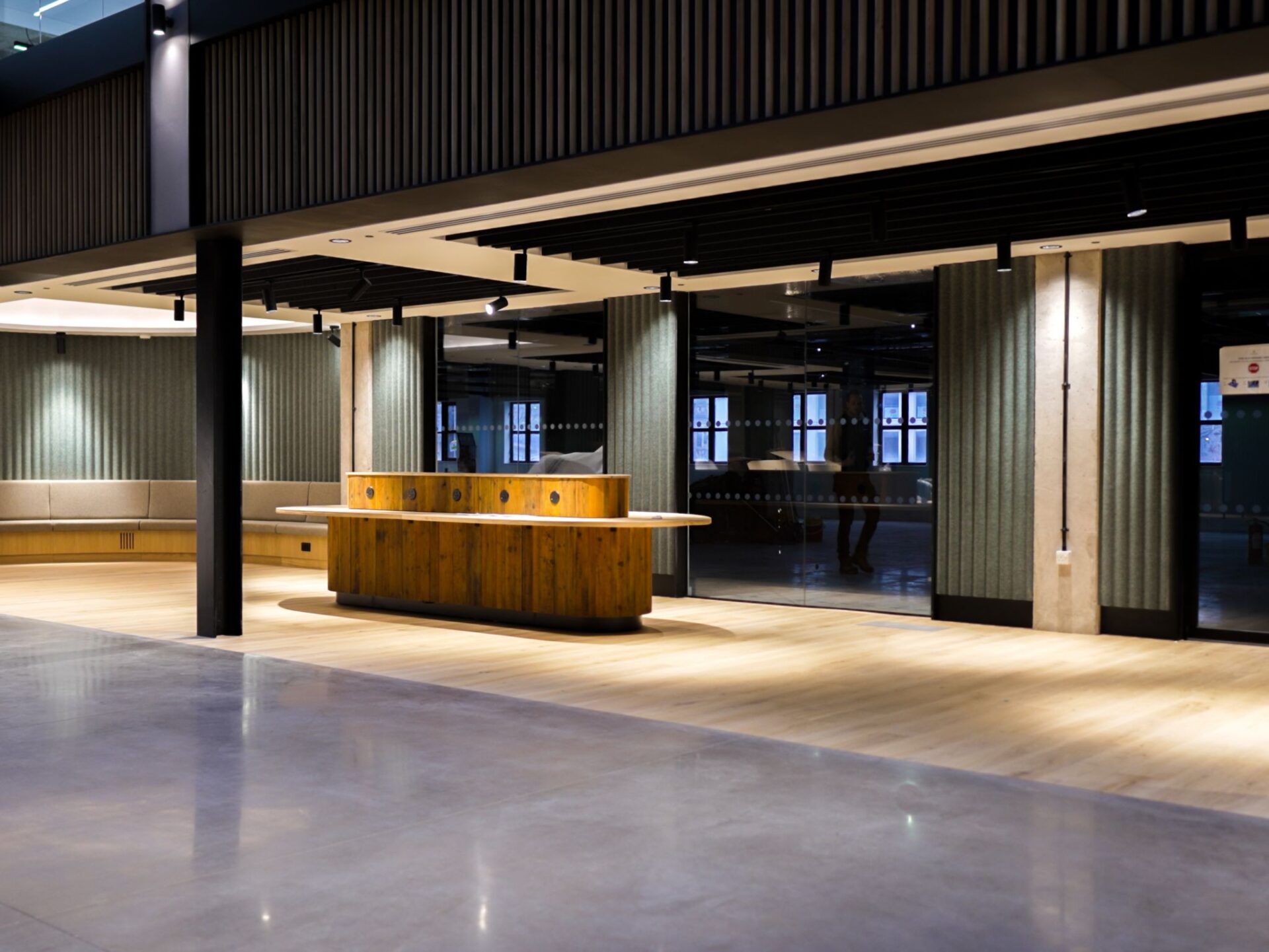
One exemplar of retrofit-led decarbonisation is the redevelopment of 19 Cornwall Street, Birmingham. A defining feature was the reconfiguration of the central atrium; reduced in size to maximise lettable floor space and built using responsibly sourced and low environmental impact materials.
All mechanical, electrical and plumbing services were replaced as part of an all-electric strategy incorporating 400 sq m of photovoltaic panels, VRF heating and cooling systems, and smart controls.
As a result, the seven-storey, 139,000 sq ft property achieved a significant performance uplift, earning:
- BREEAM Excellent rating,
- EPC A rating,
- WiredScore certification,
- NABERS UK Target Rating of 5 stars.
A prominent Grade A office refurbishment in Birmingham’s Central Business District, 5 St Philips Place, further demonstrates how quality approaches can drive decarbonisation while enhancing occupier experience and long-term asset value.
Working with the existing structure provided significant embodied carbon savings compared to a new build, while preserving the building’s historic Art Deco exterior. The refurbishment comprised a full M&E replacement and a new VRF heating and cooling system to improve energy efficiency and occupant comfort. Outcomes include WELL Platinum and WiredScore Platinum certifications.
Future-proofing
With an overarching need to improve and upgrade buildings of all kinds across the public and private sectors, retrofitting existing assets will remain one of the most impactful actions property owners can take. It should be seen as a strategic opportunity to protect and add value by delivering increased efficiency and business resilience in an ever-shifting geopolitical climate.
For support overcoming challenges and progressing toward a resilient, low-carbon future, read Willmott Dixon Interiors’ Decarbonise Today brochure or get in touch.
Discover more about our commitment to Sustainability & Social Value in Construction.